

The Restless Crucible Book Review
Have you ever encountered a book that reaches through time to shake you by the shoulders, demanding not just your attention but your complete emotional investment?
“The Restless Crucible” by Yaw Agawu-Kakraba is that rare historical fiction that excavates forgotten narratives with such visceral power that you’ll be haunted long after turning the final page.
At its core, this transcontinental saga follows Pedro de Barbosa – ex-slave, con artist, slave trader, warmonger, and lover – a walking contradiction whose journey spans from Brazilian plantations to the Portuguese elite to the royal courts of West Africa.
What makes “The Restless Crucible” so unique is its brilliant narrative construction. The first part offers Pedro’s memoir, seemingly honest and raw, only for the second part to yank back the curtain through an omniscient narrator who reveals Pedro’s calculated manipulations and convenient omissions. This structural innovation transforms a compelling historical tale into a meditation on truth, identity, and the stories we construct to justify our actions.
The novel’s exceptional handling of setting transports readers across three distinct worlds – from the sweltering plantations and urban underbelly of Salvador da Bahia in Brazil to Portugal’s aristocratic circles, and finally to the complex political landscape of the Kingdoms of Dahomey and Ouidah in West Africa. Agawu-Kakraba doesn’t merely sketch these locations; he renders them with sensory precision that makes them breathe on the page.
What elevates “The Restless Crucible” beyond typical historical fiction is how it confronts the enduring politics of slavery without reducing characters to simple heroes or villains. In Pedro, we find an anti-hero whose survival strategies raise uncomfortable questions about moral compromise.
Through figures like Queen Ena Sunu of Dahomey working against the slave trade or the complex machinations of Queen Yiram of Ouidah, the novel explores how power operates across gender and cultural lines. Even minor characters like Kosi Aholuvi, Pedro’s conflicted aide, embody the suppressed desires and divided loyalties that existed within these oppressive systems.
The novel should particularly appeal to readers who appreciate historical fiction that doesn’t flinch from uncomfortable truths while delivering literary innovation. Fans of Yaa Gyasi’s “Homegoing” or Colson Whitehead’s “The Underground Railroad” will find similar ambition here, though “The Restless Crucible” carves its own distinct path by focusing on the Portuguese-Brazilian-African triangle of the slave trade – a perspective rarely explored in literature.
Agawu-Kakraba’s prose strikes that delicate balance between accessibility and poetic resonance, making the novel both intellectually stimulating and emotionally gripping. His background as a professor of Spanish and African Studies informs the work without ever making it feel academic or detached.
The inclusion of a glossary and recipes from the cuisines mentioned adds another sensory dimension to this already richly textured work. It’s these thoughtful touches that make “The Restless Crucible” feel like more than just a novel – it’s an immersive historical experience that challenges readers to engage with a painful history in a new way.
“The Restless Crucible” ultimately succeeds by refusing easy answers. It acknowledges that the scars of slavery are “as long and harrowing as time itself” while inviting readers to contemplate how these historical forces continue to shape our present. This isn’t just historical fiction – it’s a reckoning with history that feels urgently relevant to our contemporary conversations about power, race, and collective memory.
The Restless Crucible Book Description
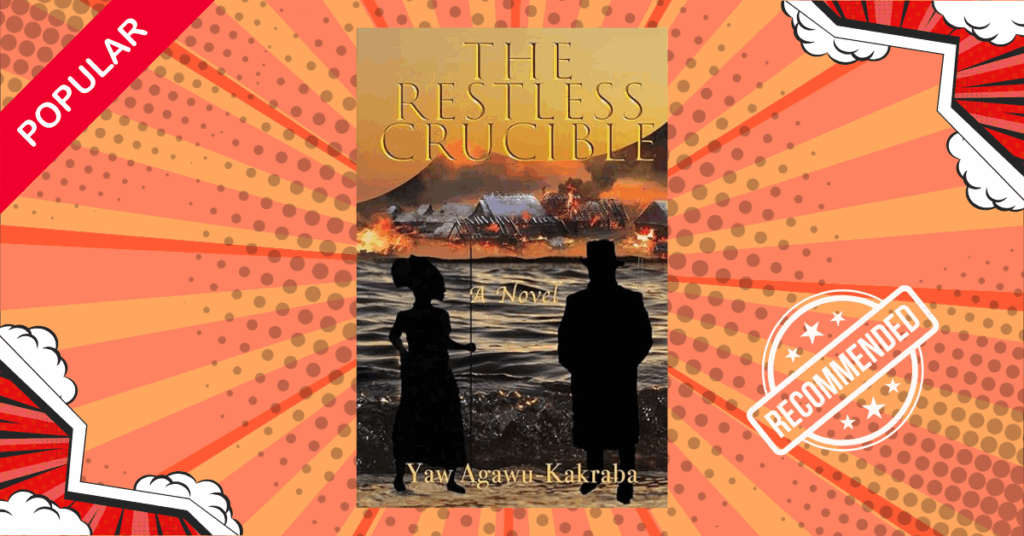
Winner of the African Literature Association Book of the Year Award-Creative Writing 2024 for an outstanding book of African literature by an African published in 2023!
The Restless Crucible narrates the story of Pedro de Barbosa, a Brazilian ex-slave now turned slave merchant, who must go up against Queen Ena Sunu, the powerful Dahomeyan monarch resolved to end slave traffic in her kingdom.
Set in late 18th- and early 19th-Century Salvador da Bahia, Brazil, and Dahomey on the West African coast, the novel describes Pedro de Barbosa’s fight to become free in the Brazil of his time, as well as the events and actions that lead him to engage in the abominable yet lucrative slave trade.
At the heart of this trajectory are the conditions that condemn an individual to poverty, discrimination, and humiliation because of skin color.
The project to insulate himself from these injustices leads to a confrontation with the Dahomeyan Queen Ena Sunu, whose personal story of forced marriage to the Dahomeyan King, and the negation of her agency as a female in this tradition-bound society, brings an uncomfortable identification with the enemy and the need to protect her society from both local and foreign predators.
Queen Ena Sunu’s misgivings are confirmed when her husband, along with the Portuguese Governor and the king of Ouidah, deposes her father and sells him and his royal family into bondage.
Queen Ena Sunu resolves to thwart the slave business in Dahomey and Ouidah, bringing up a long-delayed showdown with Pedro de Barbosa.