
I am simply an ordinary “John Doe” caregiver, a husband sharing my experiences living and caring for my wife with Alzheimer’s. We have been married for 44 years, three kids now grown up, a great dog most of those years, and a typical family on our own trying to hold on to my wife and avoid her shut down. I began to realize there are probably other “amateur” caregivers like me on their own trying to take care of a loved one with Alzheimer’s Disease and possibly could benefit from my shared personal experiences. Soon this diary turned into this book. Writing “alleviated” my continuous sorrow and indirectly helped me make emotional decisions and changes in how to interact with her dramatic behavioral changes as her 24/7 caregiver. The Purpose of This Book: This book started as a daily diary noting my wife’s behavior and my reactions, which helped me vent my sorrow and how to react to her changes and her needs as her caregiver. The laptop screen became my “ghost friend”.
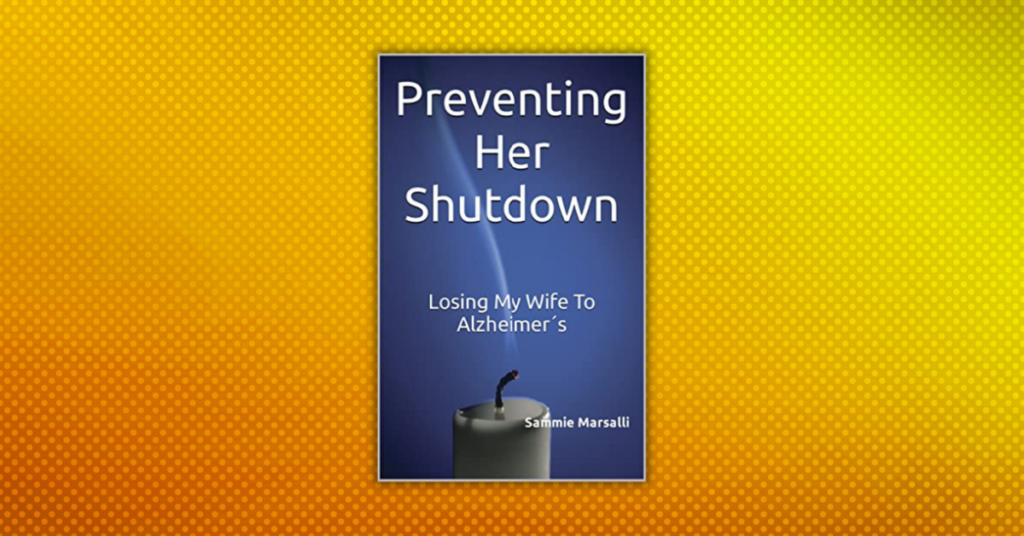
Outside professional help doesn’t work as there are no two behavioral reactions to Alzheimer’s precisely alike. Each person reacts differently to this disease, so there isn’t an exact “to-do list.” An outside professional also is of no help for the same reason. Every family is attending to their loved ones as caregivers are on their own. There isn’t a guide to follow. How do I connect with my wife and get her to communicate with me? This is always a constant desperation as her caregiver, especially because she doesn’t speak. I am always afraid she will stop connecting with me, especially when I get that “blank lost look,” which happens often. Described are the different things I do when that happens to get her to reconnect, sharing details of “what worked and what didn’t work for me.” My Method for Writing: I am always writing and taking notes in real-time of her behaviors, daily events, and my reactions. I take notes as things happen so I can easily remember how I felt and reacted. It’s easy to remember feelings in general terms, such as happiness, sadness, etc. but not the thought process in detail that went on during those emotions. This is why I am always writing “in real-time.” Noting my current reactions helps justify or correct my decisions for the next day as her caregiver. The Book Cover: The image of the candle recently flickering and now smoking shows that light has slowly disappeared just as Alzheimer’s slowly shuts down life. The title: “Preventing Her Shutdown,” represents my desperate caregiving efforts to keep my wife interactive and mobile and avoid a vegetative state. The subtitle “Losing My Wife To Alzheimer’s” acknowledges my futile efforts to fight for her life. At the moment, no other title reflects the content of this book.